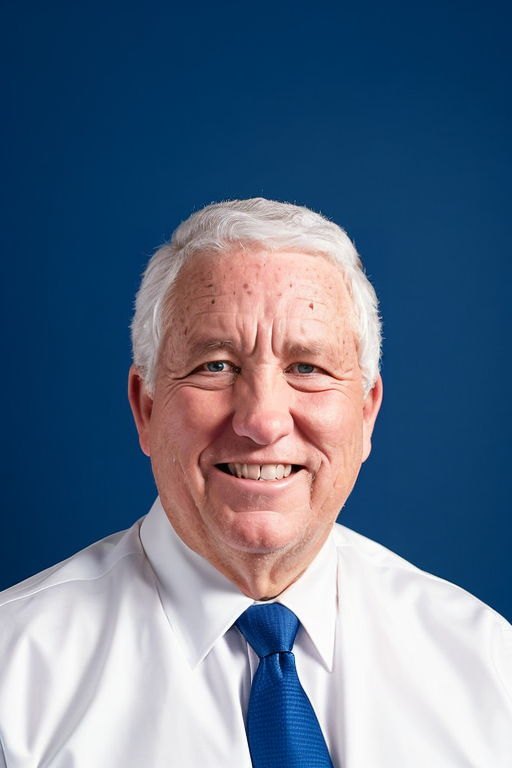
Ken Edmonds has spent his career on the service side of this industry — as a technician, a dealer, a service manager, and a manufacturer-level trainer. 22nd Century Management is where all of that experience comes together: practical training that turns great technicians into great service managers.
“They were already great at fixing equipment. What they needed was to learn how to fix people.”
From the flight line to electronics
Ken started working on computers in 1970, in the U.S. Air Force. After basic electronics he was sent to an advanced course on troubleshooting computers — to this day, one of the best training courses he’s ever taken, and an early lesson in what good instruction can do. He spent ten years in the Air Force working on electronic and computer equipment, both ground-based and airborne. A short stint in a factory followed (not for him), and then several years with the FAA.
Building — and running — a dealership
Looking for something of his own, Ken and his wife started a company remanufacturing toner cartridges, back in the days of the HP LaserJet II, III, and 4. Customers started asking whether he could service their copiers. He tried it, found he was good at it — and before long they were asking to buy copiers from him too. Almost without planning it, he had become a full-fledged copier dealer.
His specialty was always the same: the service side, and service management. Sales management was never his strong suit, so eventually he and his wife sold the company.
Learning from the best in the business
Over the next stretch of his career, Ken served as service manager at three very different dealerships — different management styles, different territories, and a broad education in how service departments really run. One owner, who had come up through service management himself, taught Ken the executive side of the business: how to work with ownership, and how to write a cost-justified business plan tight enough that a busy owner could say yes quickly. Ken never had a proposal turned down.
Then he moved to the manufacturer side, first with Sharp, which invested heavily in his development. He took every industry management course they offered — including SMART (Service Managers Achieve Results Through Training), the Pro Finance course, and the Fixed program (several of them twice, just to absorb everything) — plus formal train-the-trainer instruction on how to teach technicians to service equipment properly. Later, at Konica Minolta, he continued working with some of the largest dealers in the United States.
Across all of it, Ken worked with service departments of every size — from two people to several hundred — collaborating with their managers and watching, closely, what worked and what didn’t.
The problem he kept seeing
One pattern showed up everywhere: a dealership would take its best technician and promote him into service management — then leave him to figure out the rest. The results were rarely as good as they could have been. Ken watched talented people quit, step back down to technician roles, or simply stay miserable in a job they were never prepared for. Some succeeded — but slower, and harder, than they should have. The missing piece was almost always the same: real, formal education in leading and developing people.
The course
When Ken retired, he built the course he’d wished those managers had — a college-level program in service management covering the financial side, the people side, and the service metrics that actually matter (and which ones don’t). Four books anchor the reading: The One Minute Manager, Customers for Life, Leaders Eat Last, and The Coaching Habit — together giving managers a broad, practical foundation in leadership and coaching. He’s refined the program continually ever since, first as separate basic and advanced courses, later combined into one.
Adding AI
More recently, Ken began working hands-on with artificial intelligence — learning to build role-specific AI agents (a receptionist, an executive assistant, and more) and seeing firsthand how much value the technology can bring to a dealership and its customers. He realized those same skills belong in a service manager’s toolkit. So the training is evolving again: a combined program that pairs the full service-management curriculum with the new AI Course for Service Managers.
It’s the same goal it’s always been — give service managers the tools to lead people, not just fix machines.